

You’re reviewing the rebrand concepts with your team. The creative is strong. The strategy is sound. But there’s one question everyone keeps coming back to:
“What will our customers think?”
It’s a reasonable question. After all, customer relationships are the foundation of your business. But here’s where it gets complicated: when you actually ask customers for input, the feedback often conflicts. Some love the new direction. Others say it “doesn’t feel like us.” A few suggest changes that would pull everything back toward something safer, more familiar.
So what do you do? Follow the majority opinion? Trust your strategic vision? Try to please everyone?
This is where most rebrands get stuck — or worse, get diluted into something that satisfies no one.
Here’s what we’ve learned: customer input can be one of your most powerful tools in a rebrand. It can also be the fastest way to water down everything that makes your brand distinctive. The difference isn’t whether you listen to customers — it’s how and when you involve them in the process.
Why This Decision Feels So Difficult
A rebrand asks you to examine who you are, how you’re perceived, and where you’re headed. It’s inherently vulnerable. Naturally, you want reassurance that customers will understand and embrace the change.
The stakes feel even higher when:
- You’re rebranding for the first time after years or decades in business
- Your customer base includes long-standing relationships
- You’re caught between modernizing to compete and staying true to your roots
- Internal teams are split on how far to go
Customer input can provide critical insights:
- Where perception gaps exist between what you do and how you’re understood
- What emotional language customers already associate with your brand
- Where friction or confusion exists in their experience with you
But customer input cannot — and should not — define your future direction. Here’s why.
When Customer Input Is Valuable
1. Understanding Perception (Not Direction)
Customers are excellent at telling you how your brand currently feels — what they trust, where confusion exists, what words they use to describe you. But they’re not responsible for defining where the brand should go. Their role is to inform the starting point, not the destination.
Real Example: When Airbnb rebranded in 2014, customer research revealed something unexpected: people didn’t see Airbnb as just a place to find cheap accommodations. They talked about “belonging” and “feeling at home anywhere.” This perception insight didn’t tell Airbnb what their new brand should be, but it clarified why they needed to evolve beyond “affordable travel rentals” and toward “belong anywhere” — a positioning that reflected how customers were already experiencing the service, even if the brand hadn’t articulated it yet.
2. Identifying Experience Gaps
Customer insights are especially useful when assessing practical touchpoints:
- Website usability and navigation
- Content clarity and accessibility
- Onboarding or purchase friction
- Tone mismatches between brand promise and actual experience
This feedback ensures your rebrand solves real problems, not just aesthetic ones.
3. Validating Clarity, Not Creativity
Customer input works best after strategic decisions are made, when the goal is to test execution: Is the message clear? Does this feel credible? Can users understand what we do quickly?
This type of feedback strengthens how you say something — it doesn’t rewrite what you’re saying.
When Customer Input Becomes a Risk
1. Defining the Brand’s Vision
Customers react to what exists, not what’s possible. If you ask them to define your future, you’ll get consensus over conviction, familiarity over differentiation, comfort over ambition.
Real Example: When Apple was developing the iPhone, focus groups said they wanted a better BlackBerry — physical keyboards, email optimization, the familiar. Customers couldn’t envision a touchscreen-only device because nothing like it existed yet. If Apple had followed that input, the iPhone would never have been created.
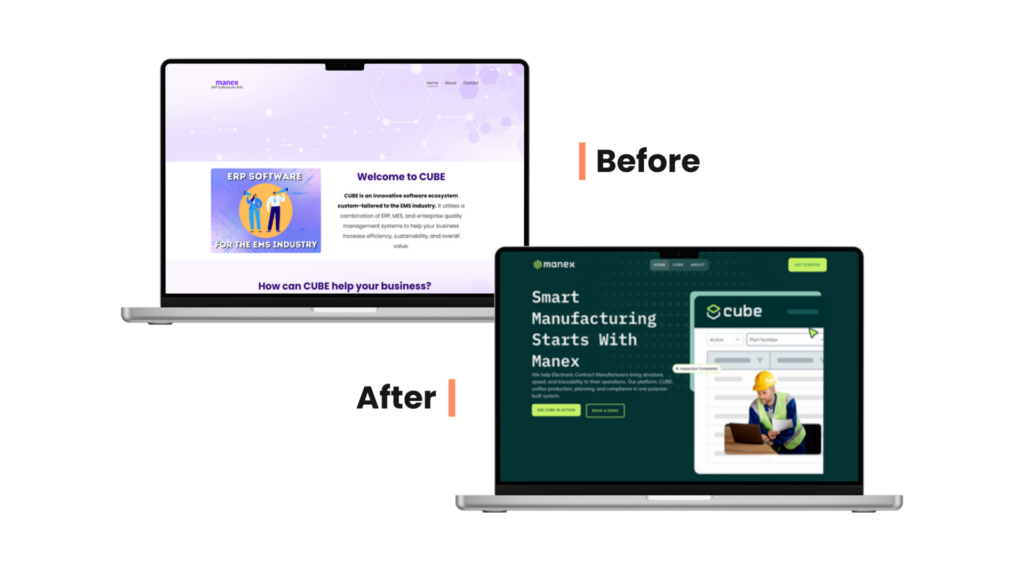
Similarly, when we repositioned Manex — a 30-year-old EMS software company — from legacy manufacturing software provider to “a complete system built for modern electronics manufacturing,” early feedback suggested staying with familiar industry terminology. But that’s exactly what competitors were doing. The rebrand required leading with a clearer, more confident vision — one that existing customers would understand and appreciate after experiencing it, not one they could define beforehand.
A strong rebrand requires leadership, not voting.
2. Designing by Committee
Customer feedback often conflicts. Attempting to satisfy everyone results in safe, generic creative, watered-down positioning, and a brand that looks like competitors instead of standing apart.
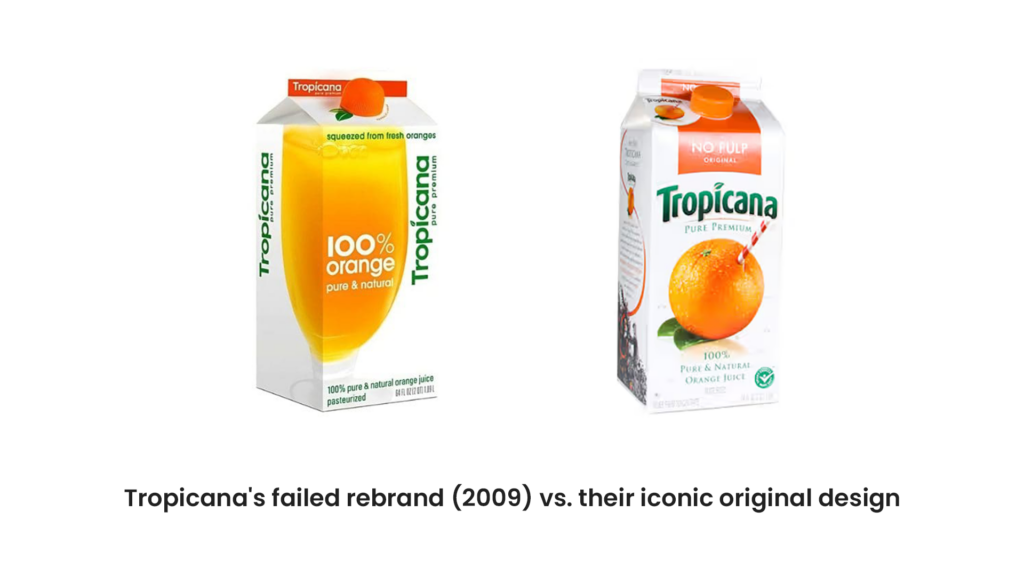
Real Example: Tropicana’s 2009 rebrand is a cautionary tale. After removing their iconic orange-with-straw imagery in favor of a generic glass of juice, sales dropped 20% in just two months. The company lost $30 million and quickly reverted. What happened? The new design tested well in focus groups — it looked “modern” and “premium.” But it abandoned the distinctive visual equity that made Tropicana recognizable on shelf. Averaging customer opinions led to something that pleased everyone in theory but connected with no one in practice.
Great brands aren’t built by averaging opinions. They’re built by making intentional choices about who the brand is for — and who it’s willing to leave behind.
3. Using Feedback to Avoid Decision-Making
Sometimes customer input becomes a delay tactic, a way to defer difficult internal choices. But indecision masked as research still leads to weak outcomes.
Customer insight should support confident decisions, not replace them.
How to Use Customer Input the Right Way
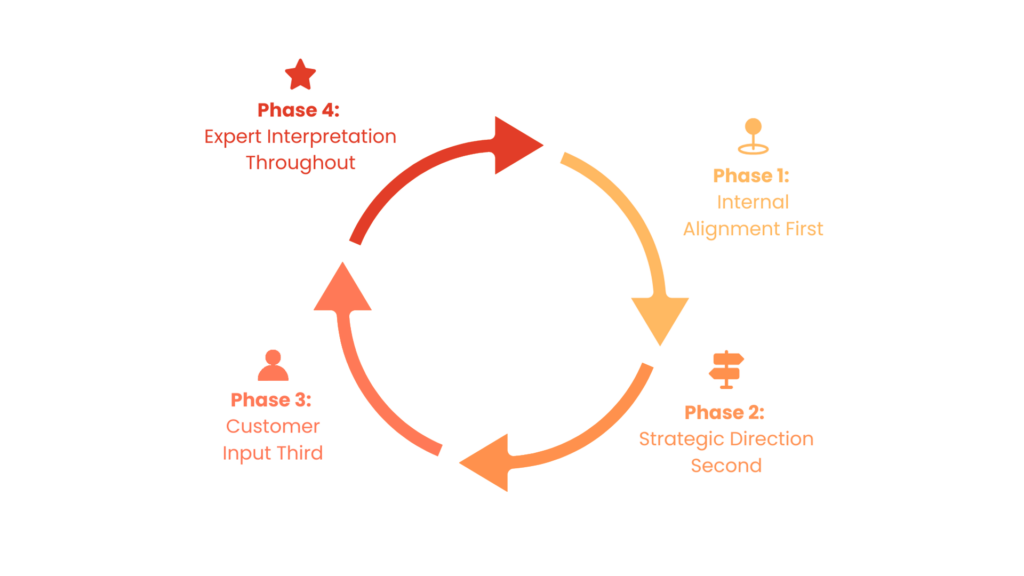
The most effective rebrands follow a clear sequence. Here’s the process that protects both your customer relationships and your strategic vision:
Phase 1: Internal Alignment First
Get clear internally on:
- Where is the business actually headed? (Capabilities, markets, scale)
- What does the brand need to communicate now that it didn’t before?
- Who are you trying to reach that you’re not currently reaching?
- What can you not compromise on, even if customers resist?
This clarity prevents using customer feedback as a way to avoid hard decisions.
Common mistake at this stage: Hoping customer input will tell you what direction to take. It won’t. You need to lead with vision, then validate execution.
Phase 2: Strategic Direction Second
With your agency partner, establish:
- Brand positioning that reflects where you’re going (not just where you’ve been)
- Messaging that balances any legacy credibility with modern relevance
- Visual direction that honors existing equity (if applicable) while signaling evolution
This is where hard choices get made: Which parts of the existing brand do we keep? What needs to change? Why?
What this can look like: A legacy brand might keep their distinctive color (equity customers recognize) but completely modernize typography, photography, and messaging to compete for new markets. A newer company might lean into bold differentiation from the start.
Phase 3: Customer Input Third
Now — and only now — should you involve customers. But here’s the key: don’t ask them to design or approve the strategy. Ask them to help you validate clarity and credibility.
Good questions to ask customers:
- “When you see this, is it clear what we do?”
- “Does this feel credible coming from us?”
- “Can you understand the value quickly?”
- “Does anything feel confusing or inconsistent with your experience?”
Questions to avoid:
- “Do you like this?” (Subjective preference)
- “Which version do you prefer?” (Design by committee)
- “Does this feel like us?” (Anchors to the past, not the future)
Phase 4: Expert Interpretation Throughout
This is where your agency partner earns their keep. Raw customer feedback needs strategic interpretation.
Customer input is data, not instruction.
Interpreting Customer Feedback Strategically
One customer saying “this doesn’t feel like us” doesn’t automatically mean the work is wrong.
It might mean:
- The brand is evolving, and that feels unfamiliar (expected)
- You’ve successfully elevated to compete at a new level
- You’re expanding beyond a single legacy segment
Not all resistance is bad. Some of it is productive tension that signals necessary growth.
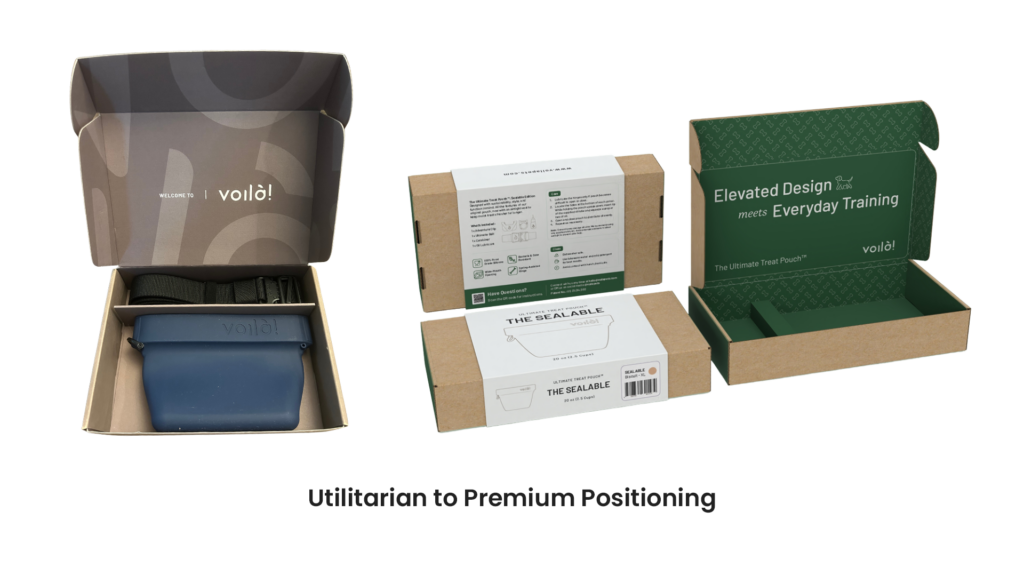
Real Example: When we repositioned Voilà Pets from “training gear” to “premium lifestyle accessory for the aesthetic pet parent,” some longtime customers (professional trainers) initially said it felt “too fancy” or “not what we’re about.”
That feedback didn’t mean we were wrong. It meant the brand was successfully expanding beyond its original niche. The discomfort wasn’t a red flag — it was confirmation that we were evolving the brand to reach a broader audience while maintaining credibility with core users. A year later, sales and brand recognition had grown significantly, and those same customers understood the strategy.
The lesson: Customer discomfort with change doesn’t always mean the change is wrong. Sometimes it means you’re doing exactly what you need to do.
Your agency should help you distinguish between:
- Feedback that reveals a real problem (unclear messaging, confusing positioning, credibility gap)
- Feedback that reflects natural discomfort with change (unfamiliarity, nostalgia, fear of the unknown)
Special Consideration: Long-Standing Customer Relationships
If you’ve been in business for decades and are navigating your first major rebrand, you’re likely facing an additional layer of complexity. Your customer relationships span years — sometimes decades. These are the people who built your business.
When they express concern about change, it’s natural to second-guess your direction. But here’s what we’ve learned working with established brands through this exact challenge:
Balance Preservation with Evolution
Most successful rebrands for established companies aren’t complete reinventions — they’re strategic evolutions.
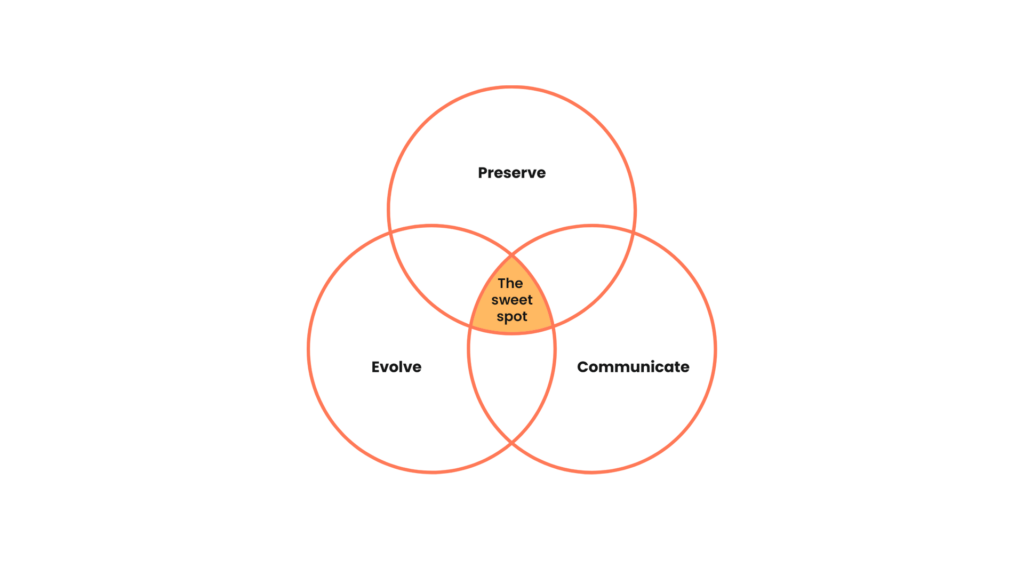
The framework:
- Preserve: What do customers already trust and recognize? What visual or verbal elements have earned equity?
- Evolve: What no longer represents your capabilities? What makes you look smaller or less sophisticated than you are?
- Communicate: How do you help customers understand why you’re evolving?
Address the Fear of Losing Customers
If your rebrand is strategic (not arbitrary), most longtime customers will stay — especially if you:
- Communicate the “why” clearly: Help them understand this evolution lets you serve them better, not differently
- Show continuity alongside change: Preserve key brand elements (colors, values, core messaging) that signal you’re still you
- Demonstrate capability, not just aesthetics: Make it clear this isn’t cosmetic — it reflects real growth in what you can deliver
Remember: Your Customers Want You to Succeed
Your loyal customers don’t want you to become unrecognizable, but they also don’t want you to fall behind or become irrelevant. Most will understand that staying competitive means evolving — they just need to see that you’re still the company they trust, now positioned for what’s next.
The key is leading with vision, using customer input strategically, and trusting your agency partner to help you interpret feedback through a strategic lens — not react to every concern as a veto.
Final Thought: Listening Without Losing Direction
Customer input is most powerful when it’s used with purpose.
The goal isn’t to please everyone — it’s to build a brand that’s clear, confident, and aligned with where the business is going. A successful rebrand listens carefully and leads decisively.
Because customers can tell you where you are. But only you can decide where you’re going next.
Ready to lead your rebrand with clarity and confidence? Let’s talk about how strategic brand work can help you balance customer insight with bold direction. Get in touch