Skip to content
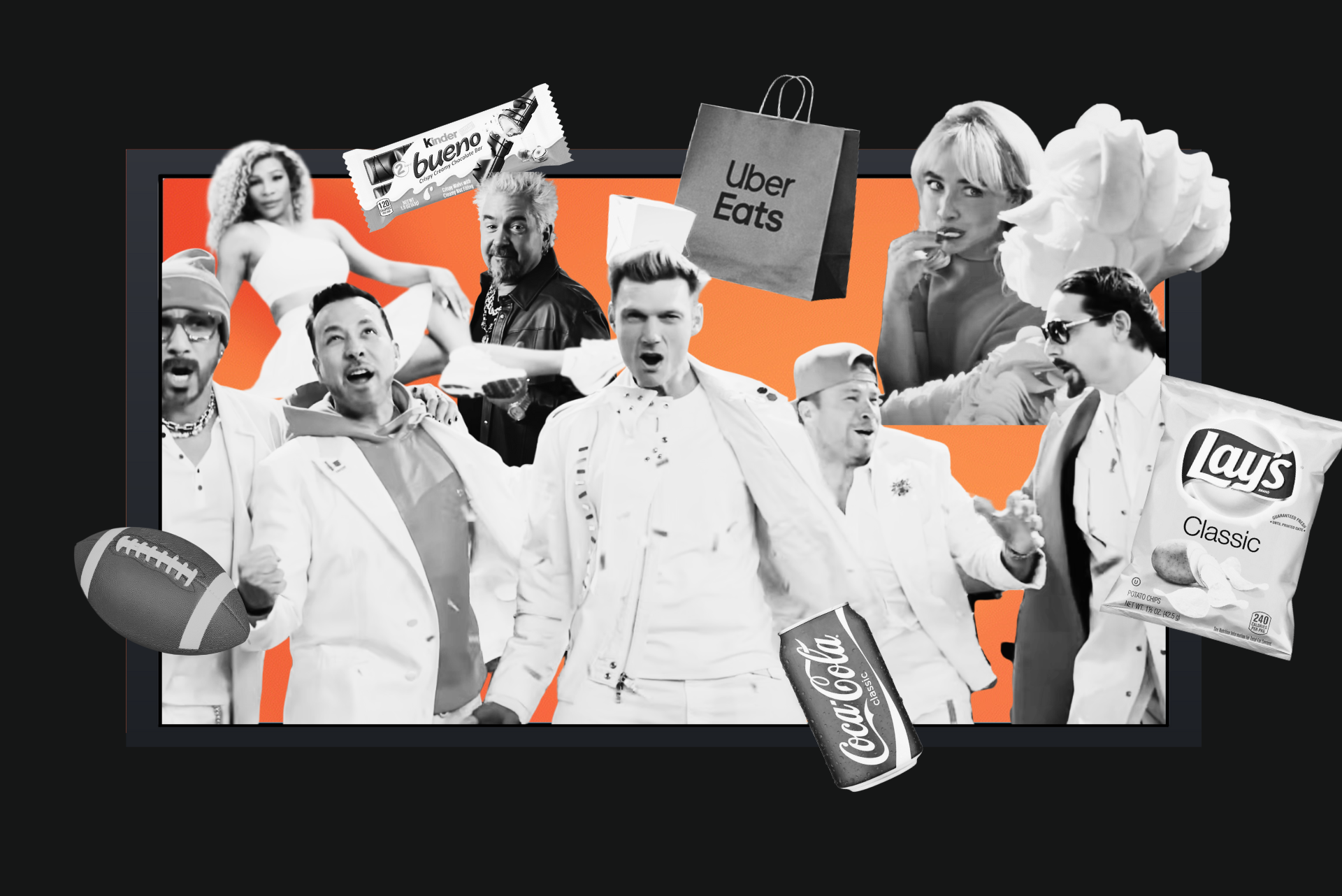
Super Bowl LX wasn’t just a game — it was a referendum on where advertising is headed in 2026.
Between the nostalgia-heavy callbacks, the AI company showdown, and the celebrity cameo arms race, this year’s ads revealed something deeper: brands are hedging their bets. Some are leaning into comfort and familiarity. Others are betting on the future, sometimes at the cost of clarity. And many are throwing celebrity star power at the problem, hoping it sticks.
After watching every ad, tracking the social conversation, and analyzing what worked (and what fell flat), here are the four major trends shaping creative strategy — and what they mean for marketers at every level.
Trend 1: Nostalgia-Core Is the New Safe Haven
What happened:
In a Super Bowl dominated by AI hype and tech futurism, the ads that felt most comforting were the ones that reminded us of simpler times.
What worked: Lay’s
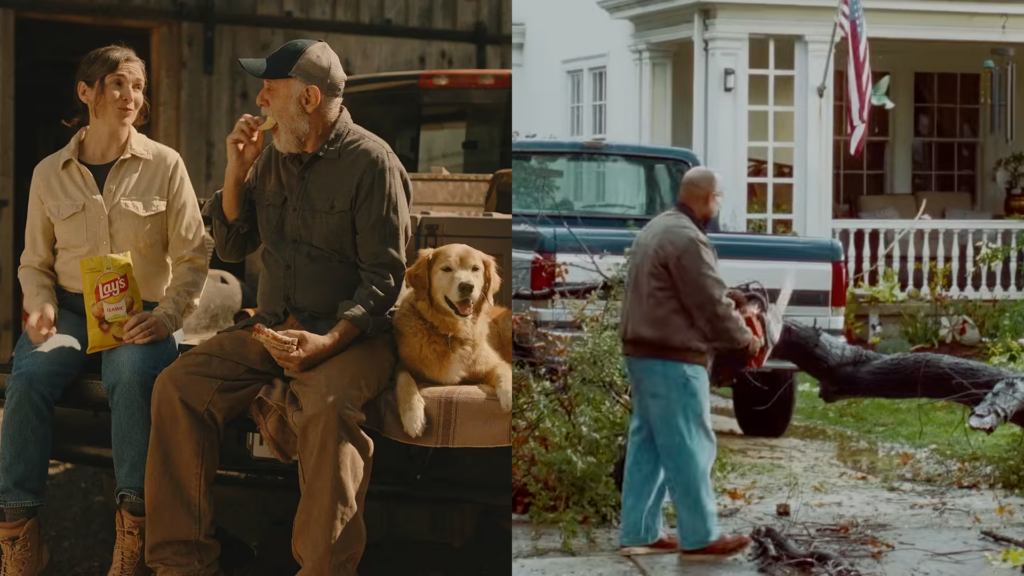
Lay’s leaned into classic, feel-good advertising — no gimmicks, no celebrity overload, just storytelling that stayed true to ads they’ve done for years. It wasn’t particularly innovative or relatable in a personal way — it was familiar. And in a lineup crowded with robots and screens, that familiarity felt like a breath of fresh air.
Why it worked:
When everything around you screams “the future is here,” consistency becomes a strategic differentiator. Lay’s didn’t try to compete with AI spectacle or reinvent their approach — they stayed in their lane and won by being recognizable. It’s the advertising equivalent of comfort food: not exciting, but exactly what you expected, and that’s the point.
Also worked: Rocket Mortgage’s “America Needs Neighbors Like You”
Rocket Mortgage leaned into optimistic, heartfelt community messaging that celebrated the value of good neighbors. The spot succeeded in creating that warm, aspirational feeling — reminding viewers of the positive connections that come with homeownership and community involvement.
What this signals:
In uncertain times (economic anxiety, tech disruption, cultural fragmentation), brands that offer familiar comfort or optimistic warmth create psychological safety. That safety translates to trust, and trust drives purchase decisions.
Whether it’s Lay’s staying true to their brand legacy or Rocket Mortgage tapping into community values, the common thread is this: when the world feels chaotic and future-focused, people crave emotional grounding — whether that’s through familiar consistency or heartfelt optimism.
Strategic takeaway for marketers:
Ask yourself: “In a category full of noise, can we win by being the calm?”
If competitors are chasing trends, there’s strategic value in being the brand that feels timeless, reliable, and emotionally steady. This doesn’t have to mean throwback aesthetics — it can be as simple as staying true to what your brand has always been (Lay’s approach) or celebrating human connection and optimism (Rocket’s approach).
The key is offering emotional stability in a format that feels genuine to your brand.
Trend 2: AI Companies Are Ramping Up (But Messaging Is Getting More Cautious)
What happened:
AI was everywhere at Super Bowl LX, but the messaging landscape was split: established players played it safe, while emerging brands struggled with clarity.
The Big Players: OpenAI, Anthropic, Google, Amazon
OpenAI and Anthropic continued their head-to-head competition, but both took a noticeably more cautious tone than previous years. Instead of “AI will change everything,” the messaging shifted to “AI that works with you” and “AI you can trust.”
Google and Amazon, meanwhile, kept their AI messaging almost invisible — integrating it into product features rather than making AI the hero. The subtext: we have AI, but we’re not going to scare you with it.
The Emerging Players: Base44, ai.com
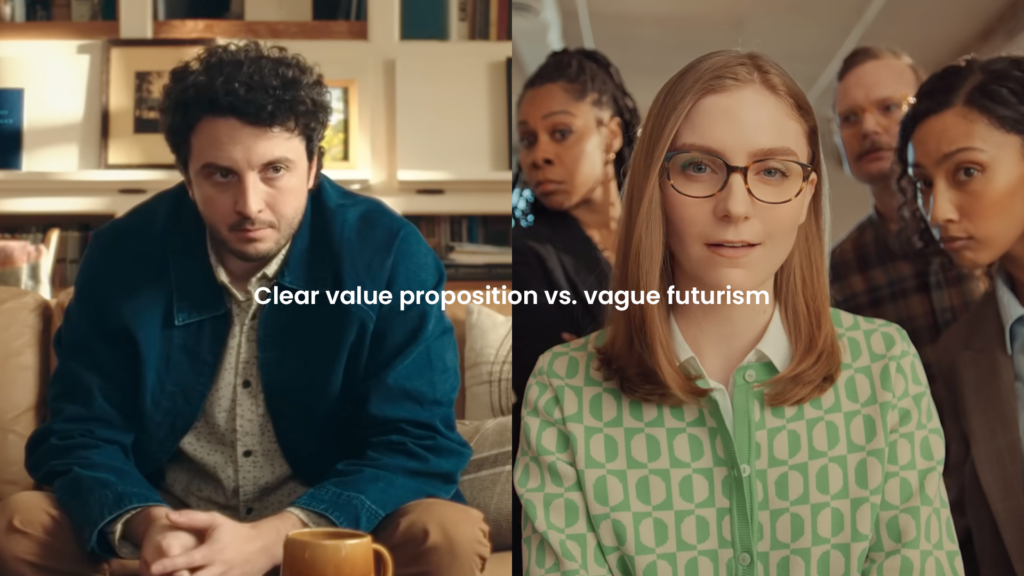
Then there were the newcomers — brands like Base44 and ai.com that spent millions on Super Bowl airtime but left viewers asking: “Wait, what does this actually do?”
The ads had slick production, big ideas, and vague promises about “the future of work” or “intelligence for everyone.” But when the spot ended, the value proposition was unclear. Social media lit up with confusion, not curiosity.
Why this matters:
The AI advertising landscape is maturing — and clarity is becoming the new currency. Early-stage AI companies can no longer rely on hype alone. If you can’t explain what you do in 30 seconds, you’ve wasted your Super Bowl budget.
What this signals:
We’re entering the “AI commoditization phase.” As AI becomes table stakes, brands that win will be those that can clearly articulate what problem they solve and why it matters to real people. Vague futurism doesn’t cut it anymore.
Strategic takeaway for marketers:
If you’re marketing a tech product (AI or otherwise), lead with the outcome, not the technology.
Don’t say “We use advanced AI.” Say “We help you write emails 10x faster” or “We find the insights your team is missing.”
Clarity beats cleverness. Every time.
Trend 3: Pop Culture Meets Internet Culture (And Brands Are Finally Getting It Right)
What happened:
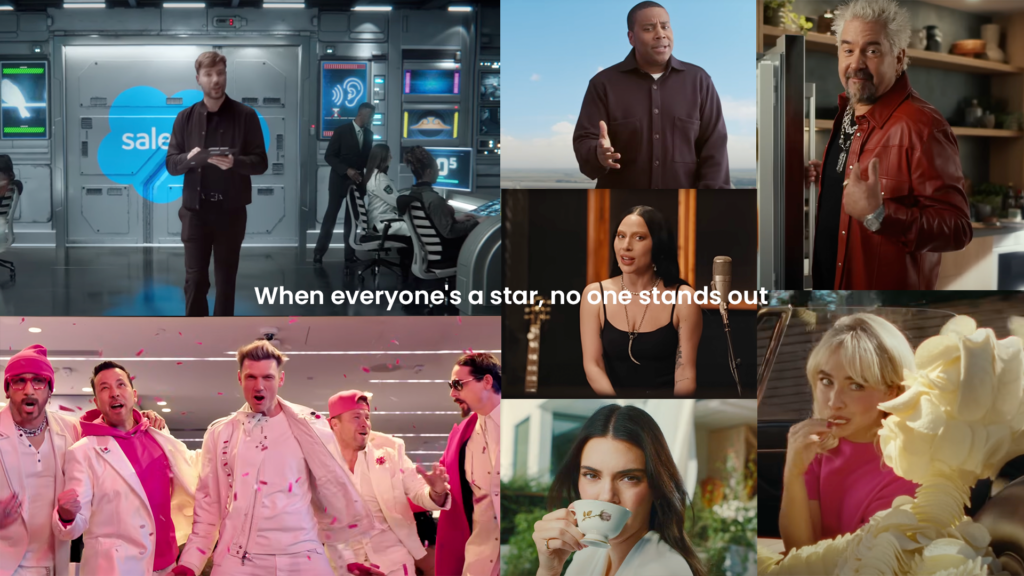
Super Bowl LX marked a turning point: brands didn’t just throw celebrities at ads and hope for buzz — they understood the assignment. This year’s standout celebrity moments succeeded because they were rooted in internet culture, not just traditional star power.
What worked (and why):
Lay’s + Sabrina Carpenter
Lay’s partnered with Sabrina Carpenter in a way that felt organic to both her brand and theirs. Rather than forcing a generic celebrity endorsement, the collaboration tapped into Sabrina’s current cultural moment and internet presence. The ad worked because it understood who her audience is and why they care about her — not just that she’s famous.
Bosch + Guy Fieri
Bosch created days of internet buzz before the game by teasing that Guy Fieri was losing his iconic hairstyle. The pre-game speculation wasn’t just marketing hype — it was a genuine cultural moment that lived on social media, Reddit threads, and group chats. The payoff during the game landed because the buildup understood how internet culture works: anticipation, speculation, and payoff.
Salesforce + Mr. Beast
Rather than forcing Mr. Beast into a traditional ad format, Salesforce gave him creative freedom to make something aligned with his personal content style. The result felt less like “brand featuring creator” and more like “Mr. Beast content sponsored by Salesforce.” That distinction matters. The ad worked because it respected what makes Mr. Beast’s content resonate with his audience in the first place.
What this signals:
We’re entering an era where pop culture and internet culture are fully meshed — and brands can no longer treat them as separate worlds. The celebrities who win in advertising aren’t just famous; they’re culturally fluent online. And the brands that win are those that understand the nuances of long-standing internet memes, platform-native humor, and digital culture.
The shift:
Traditional celebrity endorsements asked: “Who’s famous enough to get attention?”
Internet-native celebrity partnerships ask: “Who has cultural credibility online, and how can we authentically tap into that?”
What this means:
Celebrity cameos aren’t dying — they’re evolving. The bar is higher now. It’s not enough to hire someone famous. You need to understand:
- Their relationship with internet culture (are they meme-able? self-aware?)
- How to create pre-game buzz that lives beyond the broadcast
- When to give creators control vs. when to integrate them into your narrative
Strategic takeaway for marketers:
If you’re considering celebrity or influencer partnerships, ask:
- Does this person have internet cultural relevance beyond traditional fame?
(Kendall Jenner isn’t just a celebrity — she’s a meme. Guy Fieri isn’t just a TV host — he’s an icon with deep internet lore.) - Can we create a multi-week narrative that builds anticipation online?
(Bosch didn’t just drop an ad on game day — they created a mystery that lived on social platforms.) - Are we respecting what makes this creator’s content work, or are we forcing them into our mold?
(Mr. Beast’s Salesforce ad succeeded because it felt like his content, not a corporate script.) - Do we understand how their audience engages with them online?
If your brand team doesn’t know why the internet cares about Guy Fieri’s hair or how Sabrina Carpenter’s fanbase shows up for her, you’re not ready to tap into internet culture.
Hire someone who does.
The bottom line:
Brands need to stay culturally fluent — not just with what’s trending today, but with the layered, long-standing internet culture that shapes how people talk, joke, and connect online. The Super Bowl ads that won weren’t the ones with the biggest celebrity budgets. They were the ones that understood the internet.
What this signals:
The celebrity arms race is driving up costs without proportionally increasing impact. We’re approaching a tipping point where authenticity will outperform star power.
Strategic takeaway for marketers:
Before hiring a celebrity or influencer, ask:
- Does this person’s brand naturally align with ours?
- Will their audience care about what we’re selling?
- Can we tell a story that justifies their presence, or are we just renting their face?
If the answer to any of these is “no,” invest that budget in creative storytelling or micro-influencer partnerships that feel more genuine.
Alternative strategy: Instead of one big celebrity, consider multiple micro-influencers or real customer stories. The ROI on authenticity is climbing while celebrity returns are flattening.
Trend 4: Healthcare Advertising Is at a Crossroads
What happened:
Healthcare brands took wildly different approaches at Super Bowl LX — and the contrast revealed a major shift in how we talk about health, wellness, and medicine.
What Worked: Novartis’ Prostate Cancer Awareness Ad
Novartis did something brave: they took a scary, difficult topic (prostate cancer) and gave it a lighthearted, comedic treatment without being disrespectful. The ad acknowledged the fear, then disarmed it with humor and humanity. It was memorable, shareable, and effective — social conversation spiked, and awareness increased.
Why it worked:
The ad didn’t talk down to viewers or bury them in clinical language. It met people where they are — scared, avoidant, unsure — and made the conversation accessible. Comedy became a bridge to a hard truth.
What Missed: Hims “Rich People Live Longer” & Ro (Serena Williams)
On the other end, brands like Hims (“Rich people live longer”) and Ro (featuring Serena Williams) stumbled by framing healthcare in ways that felt out of touch.
Hims’ messaging, while provocative, reinforced the idea that longevity is a luxury good — which alienates the very people who need affordable healthcare access. Ro’s celebrity-driven approach felt aspirational but disconnected from the daily healthcare frustrations most people face.
The core issue:
Weight loss drugs and telehealth platforms continue to be framed as vanity treatments rather than solutions to real healthcare problems. When messaging leans too heavily into “look better, live like the rich and famous,” it misses the deeper truth: people want accessible, affordable care — not another luxury they can’t afford.
What this signals:
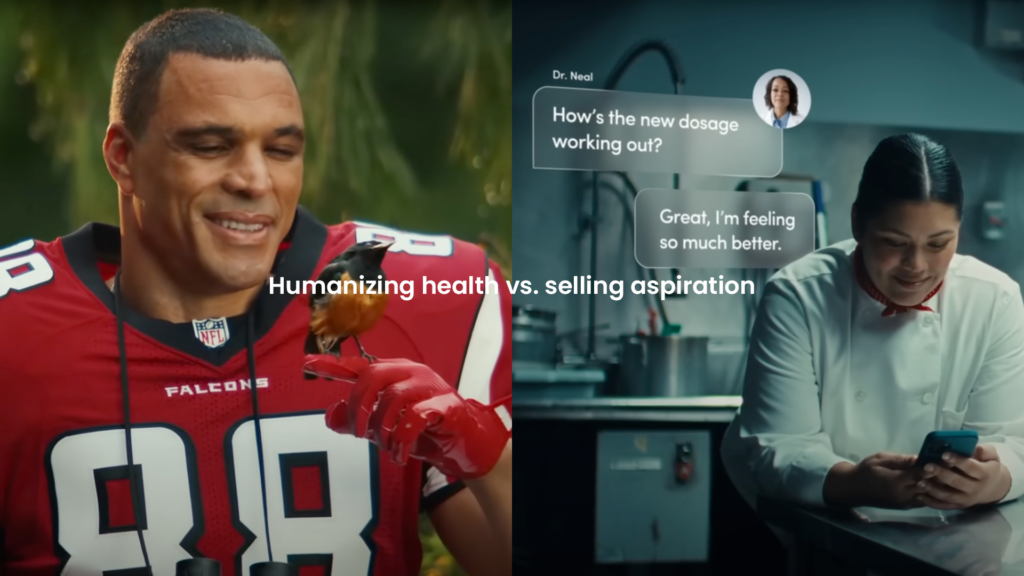
Healthcare advertising is splitting into two camps:
- Brands that humanize hard topics (Novartis approach) and meet people with empathy
- Brands that market healthcare as lifestyle aspiration (Hims/Ro approach) and risk seeming elitist
The first approach is winning trust. The second is winning clicks but losing credibility.
Strategic takeaway for marketers (especially in healthcare, wellness, or DTC):
If your product solves a real problem, lead with the problem, not the aspiration.
Ask:
- Are we speaking to real pain points, or are we selling a fantasy?
- Does our messaging make people feel seen, or does it make them feel inadequate?
- Can we use humor, warmth, or honesty to make a hard topic easier to approach?
The Novartis model shows the future: healthcare advertising that’s brave enough to be human, funny, and real. If you’re in a “serious” category, that doesn’t mean your advertising has to be sterile. Find the humanity. People will remember it.
What These Trends Mean for Your 2026 Marketing Strategy
Whether you’re planning a national campaign or a scaled-down launch, here’s how to apply these insights:
1. Don’t Chase Trends — Choose Your Lane
The brands that stood out at Super Bowl LX were the ones that committed to a clear strategic direction:
- Lay’s leaned into nostalgia
- Novartis leaned into humanizing a hard topic
- OpenAI/Anthropic leaned into trust over hype
The brands that got lost were those trying to be everything: futuristic and relatable, celebrity-driven and authentic, aspirational and accessible.
Your takeaway: Pick your positioning. Commit to it. Execute it with clarity.
2. Clarity Beats Spectacle
The AI companies that failed prove that no amount of production value can save unclear messaging.
Your takeaway: Before greenlighting any campaign, make sure a 12-year-old could explain:
- What you do
- Who it’s for
- Why it matters
If they can’t, rewrite it.
3. Celebrity Isn’t a Strategy — It’s a Tactic
Celebrity cameos are expensive shortcuts. They work when they’re strategic (aligned with brand values, target audience, and narrative). They fail when they’re decorative (just a famous face with no story).
Your takeaway: If you can’t justify why a specific person is in your campaign beyond “they’re famous,” don’t hire them. Invest in storytelling instead.
4. Lead With Humanity, Not Aspiration
The healthcare trend applies beyond healthcare: people are craving realness, not perfection.
Whether you’re selling software, CPG, or services, the brands winning in 2026 are the ones that feel human first.
Your takeaway:
- Show the problem, not just the solution
- Use humor to disarm fear or skepticism
- Make people feel seen, not sold to
The Bigger Picture: What Super Bowl LX Tells Us About 2026
Super Bowl ads are cultural signals. This year’s lineup revealed a marketing landscape in transition:
From hype to clarity. Tech companies are learning that “we’re the future” isn’t enough — you have to explain why.
From celebrity to authenticity. Star power is plateauing. Real stories and human connection are rising.
From aspiration to empathy. Especially in categories like healthcare, people want brands that understand their struggles — not brands that make them feel inadequate.
From single moments to sustained campaigns. The Super Bowl spot is now the midpoint, not the endpoint. Pre-game teasers, post-game extensions, and multi-platform activations are the new baseline.
The brands that thrive in 2026 won’t be the ones with the biggest budgets. They’ll be the ones with the clearest message, the most authentic voice, and the courage to be human in a landscape obsessed with the future.
Planning a major campaign this year? Let’s talk about how to cut through the noise with clarity, creativity, and strategy that actually connects. Get in touch