The six-fingered hand. The melted text on a shopfront sign. Lighting that arrives from nowhere and lands on nothing. Everyone has a list of AI tells now, and everyone is confident they can read them.
Scroll the comments under any brand campaign and you will watch it happen. People calling the work generated, sometimes correctly, sometimes not, always certain.
The certainty is the part worth looking at. It turns out to be mostly misplaced, and the gap between how well people believe they detect AI and how well they actually do is where the real exposure sits for your brand.
Almost Nobody Can Actually Tell
In May 2026, Ipsos and Syracuse University’s Newhouse School ran the test properly. They showed 20 ads to 3,000 US consumers, pairing human-made ads produced before 2021, when the tools did not exist, against AI-generated versions built from the same creative brief.
Only 13% of viewers who watched an AI ad were confident it was AI. Roughly the same share of viewers watching the pre-2021 human work also suspected AI. People were guessing.
The software is no better. The FTC found an AI detector marketed at over 98% accuracy performed at about 53% in agency testing.
Then the study found the part that matters. The AI ads lost anyway, and not narrowly. Human-made work scored 14% stronger on short-term sales effectiveness and 17% stronger on long-term. Against category benchmarks the human ads ran 11 points ahead while the AI versions landed 5 points behind. Same brief, same message, a 16-point swing in measured commercial impact.
Read those two findings together and the standard story collapses. If audiences cannot reliably identify AI but respond differently to it anyway, they are not reacting to provenance. They are reacting to specificity, tension, and the sense that somebody made a decision. Generative tools return the average of what they have seen, and average creative has always underperformed. The tool did not create that problem. It made average cheap enough to produce at volume.
Suspicion Is the Default Setting Now
Detection barely happens. Suspicion is everywhere, and suspicion carries the cost.
Gartner surveyed 1,539 US consumers in March 2026 and found 68% frequently wonder whether what they see online is genuine, with half preferring to buy from brands that keep generative AI out of consumer-facing content. Emplifi put the other half of the picture in place: 87% assume brand content is at least partly AI-made, while only 13% feel confident telling the difference.
A June 2026 Harris Poll with the 4As and Infillion measured what that assumption does. 78% of consumers said AI makes ads feel less authentic. 73% said they are less likely to trust an ad they suspect was AI-made. 63% said they are less likely to buy from a brand using AI-generated ads.
Note the verb in each of those. Suspect. Assume. Wonder. Not identify.
That is a different problem from the one most brands are preparing for. The question is not whether your audience will catch you. It is that they already believe they are being shown generated work, by default, before they look closely at anything.
Nike Got Accused of Something It Did Not Do
In May 2026 someone spotted what looked like AI-written copy on a Nike product page and posted it publicly. The accusation traveled. Nike had not run an AI campaign.
That is the whole exposure in one example. A brand can decline to use the tools entirely and still absorb the reputational cost of using them, because the charge does not require evidence. It requires a sentence that reads a little too smooth, a photograph a little too clean, a stock gesture that could have come from anywhere.
So the usual mitigation does not work. Avoiding AI is not a defense against being accused of AI, and neither is disclosure, which research suggests makes things worse for the brands most exposed. A label tells people what they already suspected and confirms the thing they were worried about.
What does work is harder and more familiar. If the charge is that nobody made this, the answer is work that visibly could not have been made any other way.
Craft Brands Pay the Most for This
The penalty is not evenly distributed. It scales with how much of your price is justified by craft.
Coca-Cola ran a second AI-generated holiday spot and watched social sentiment tracking show positive reaction fall from 23.8% to 10.2%. Valentino posted an AI campaign for a handbag and pulled it after viewers called it cheap and lazy. Gucci drew the same response to AI visuals promoting its Milan show. McDonald’s Netherlands pulled an AI Christmas advert.
Valentino had labeled its campaign as AI-generated. Viewers were not confused about what they were looking at. They were annoyed that it existed.
Research published in the Journal of Advertising Research found that consumers respond more negatively when luxury brands disclose AI imagery, reading the work as requiring less effort and discounting the brand’s value accordingly. Which follows. A company charging a premium for human expertise, then generating the campaign that sells it, has argued against itself in public.
The same logic reaches well past luxury. Any brand whose price depends on something being carefully made is exposed here, whether that is a $900 handbag, a small-batch pet food, or a precision instrument.
What Actually Reads as Made
If detection is unreliable and suspicion is the default, the defense is evidence. Not a disclosure, not a pledge. Visible proof that specific decisions were made by someone who was there.
Specificity that could not have been prompted. A named location, a real date, a measurement, a customer situation with details that only came from the customer. The test is simple. Delete the brand name. If the work could belong to a competitor, it reads as generated whether or not it is.
People who exist. Not a model, a person with a name and a history with the product. Aerie built its early 2026 campaign around exactly this, opening with Pamela Anderson directing an AI to generate a model.
Imperfection that survived the edit. Weather that did not cooperate. A gesture nobody would have art-directed. Generation produces competence, and competence is now the suspicious part.
Continuity across a campaign. The same room from a different angle, the same person three months later. Sustained consistency across many assets is expensive to fake and easy to read.
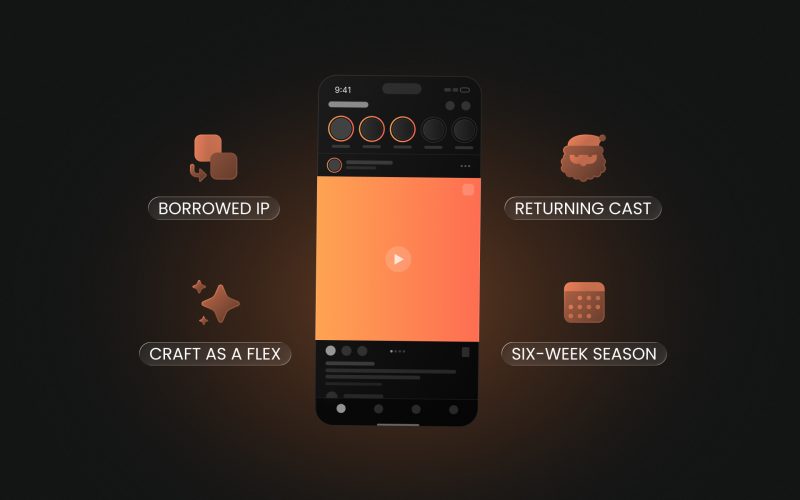
Process made visible. Cadbury shot its 2025 film with real chocolate on set and said so. Polaroid ran billboards near Apple and Google offices pointing out that AI cannot generate sand between your toes. The craft became the message rather than a footnote.
None of this requires swearing off the tools. Every brand named above still uses AI operationally. What they protect is narrow and deliberate: how the brand depicts real things to real people.
What Changes in the Brief
The line in the brief that needs rewriting is the one asking whether anyone will know. Nobody will know. They will assume, and they will assume it about your photographer’s work too.
So the useful questions are different ones. What in this campaign could only have come from us. Who is the real person in it and why them. What did we keep that an art director would have cut. What can a viewer verify in one click.
Those questions produce better work whether or not AI touched it, which is the actual finding buried in the Ipsos numbers. Human-made ads did not win because audiences detected the humans. They won because somebody made choices a model would have averaged away.
The tools are not the risk. Briefs that could have been answered by anyone are.
Getting work back that looks like it could belong to anyone? GreaterThan builds creative direction around the specifics only your brand has, so the work reads as made rather than generated. Let’s talk.