TL;DR
Most product launches underperform because they treat launch as a coordination problem. The launches that actually build value do two harder things at once. They find what makes the product genuinely worth more than the alternatives, and they build each channel around how a specific buyer decides. Here are the seven things every launch needs in 2026: sharp positioning before creative, channel mix reverse-engineered from buyer behavior, awareness before capture, category work running alongside product launch, visible storytelling for invisible value, collateral built for committee decisions, and pricing set as a category signal.
The Problem With Most Product Launches
Your product is better than the competition. You know it, your team knows it, the customers who found you know it.
The market doesn’t know it yet. And launch day is the moment you have to change that.
Here’s the trap most brands fall into. They treat launch as a coordination problem. Get the vendors aligned. Hit the deadline. Ship the announcement. Blast the message across every channel and hope it converts.
That’s not what separates the launches that build lasting value from the ones that fade in two weeks. We’ve run launches across B2B technology and DTC ecommerce for brands with real depth. Engineering, design, or formulation the market can’t see on the surface. And the pattern is consistent.
The launches that work do two harder things at once. They find what makes the product genuinely worth more than the alternatives. And they build each channel around how a specific buyer will actually decide.
Here are the seven things every launch needs to get right in 2026.
1. Positioning Before Production
Most launches start with a creative brief. That’s already too late.
The market forms its first opinion about what your product is worth during launch. Miss that window, and you spend the next two years correcting the impression. Yet most launch decks fill up with specs and features before anyone has answered the harder question: what does this product actually do for the buyer that they cannot get anywhere else?
That answer is not a tagline. It’s a positioning framework. What outcome are you creating. What does that outcome look like in your buyer’s own words. What story makes the market think about the category differently once they’ve seen you in it.
Every launch we run starts with this diagnostic before any creative work begins. Everything downstream gets easier when the positioning layer is solid. Everything downstream turns into chaos when it isn’t.
2. Channels Built Around How Your Buyer Decides
The default launch playbook is a template. Meta, Google, LinkedIn, email, PR, organic social. Brands run it because it’s what launch marketing looks like from the outside.
That is a checklist. It is not a strategy.
The better question is how does this specific buyer actually decide. What do they see first. Where do they go to verify what they saw. Who do they need to convince before they can act. What does the last step before purchase look like.
The answers change everything. A DTC buyer of a premium product usually starts on social, verifies on the brand’s site and reviews, and converts on a return visit. Social has to build desire before it can convert. The site has to reward the second visit more than the first. Email holds attention across the gap.
A B2B buyer of a complex platform usually starts with a peer recommendation or a search, does most of their research in channels you cannot measure, and needs to hand your case to a committee. Content and case studies have to survive being forwarded. Your site has to answer questions your sales team has not been asked yet. Paid search has to catch a small, very valuable window of active intent.
Same launch. Completely different systems. The brands that drop launch templates into their channels are building something that looks like marketing but does not match the buyer they are trying to reach.
3. Build Demand Before You Try to Capture It
This is the mistake that quietly ruins launches for genuinely innovative products.
Running paid search against a problem nobody is searching for is a slow, expensive way to lose money. The clicks do not come, and the ones that do arrive uneducated and unqualified.
For that launch, the paid budget had to sit behind the awareness work, not in front of it. We reframed the category through content, industry channels, and trade presence first. Once the conversation had shifted, capture channels started working. Before the shift, they would have been an expensive way to prove the mistake.
If your product creates a new category, or requires the market to reframe an existing one, sequence your launch calendar accordingly. Awareness and education come first. Capture channels turn on when there is something to capture.
4. Category Creation and Product Launch Are Two Campaigns
This is the layer most brands miss when they are launching something genuinely new.
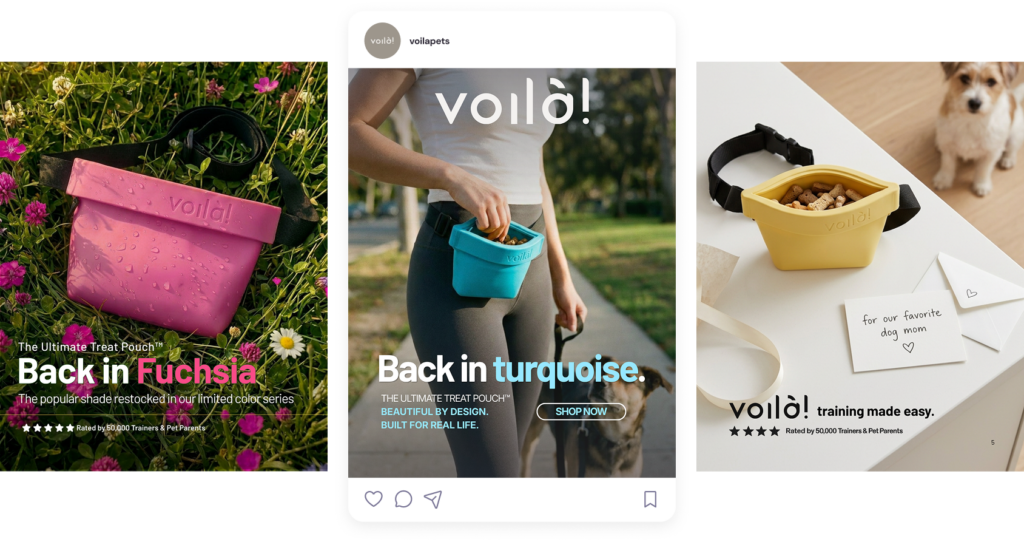
When Voila Pets launched, the premium dog treat pouch category did not exist. Consumers saw treat pouches as a disposable item sold on Amazon for twenty dollars. Nobody was searching for a food-grade silicone pouch with a patented one-handed access mechanism. Nobody thought treat pouches were an object worth caring about.
Launching Voila as a “better treat pouch” would have killed it in the comparison. Better than what. A twelve-dollar bag. The category was doing all the work of setting expectations, and the expectations were wrong.
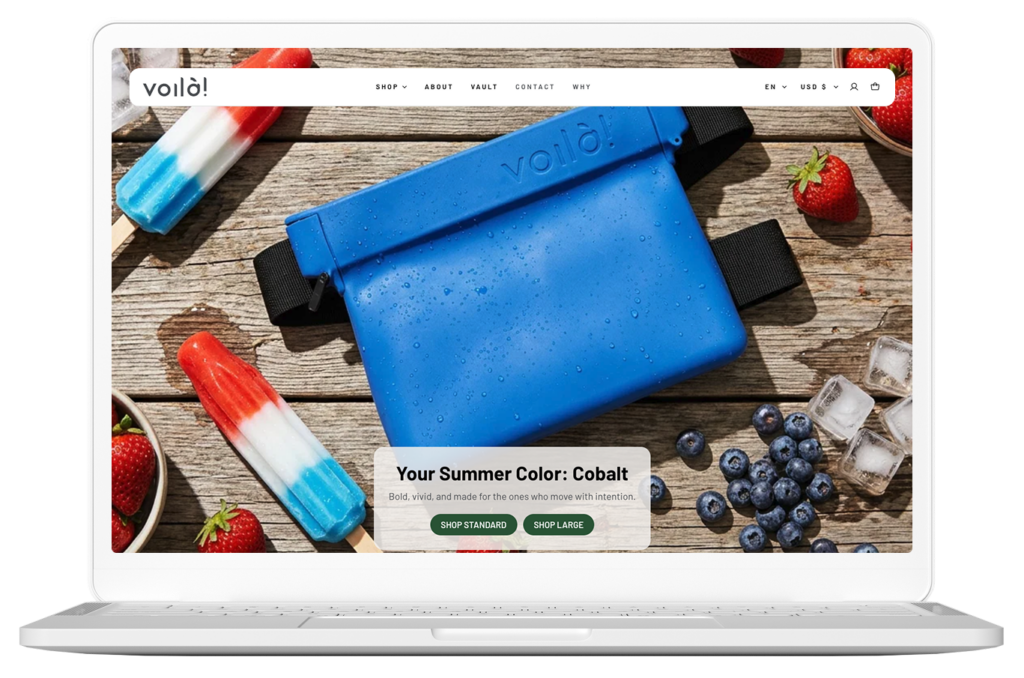
The launch had to do two jobs at once. Introduce the specific product and reposition the category it lived in. That meant creative that made treat pouches look like a lifestyle accessory, not a utility. Positioning that spoke to the buyer’s identity, not the object’s function. A shopping experience that felt like a premium brand, not a pet aisle.
If your product requires the market to think differently about your category, you are not running one campaign. You are running two, at the same time, with the same audience. Plan for both, or the product campaign will lose the argument to the category campaign every time.
5. Make the Invisible Seen
This applies to both verticals and it comes up on almost every launch we run.
ONYX ecoBLADE monitors structural integrity from inside a wind turbine blade. You cannot photograph what makes it remarkable. The technology lives where nobody can see it.
DTC brands run into the same problem in a different form. The formulation that makes a supplement better lives in the molecular structure. The engineering that makes a premium bag last decades lives in the stitching and material choices no shopper sees on a shelf. Product photography produces evidence of nothing.
Both cases require the same shift. The creative work has to make the invisible visible before any channel can carry the story. That means 3D visualization for hardware. Ingredient sourcing footage for formulation. Founder-led explainers for craftsmanship. Comparison content that shows what a shopper cannot see with their own eyes.
Skip this step and launches for brands with real depth quietly fail. The product is better and the marketing does not prove it. The market defaults to the assumption that everything in the category is more or less the same. Which means the buyer defaults to price.
6. B2B Launches Sell to Committees, Not Individuals
The biggest structural difference between B2B and DTC launches is who is actually deciding.
In DTC, one person clicks buy. In B2B, one person champions, and then has to convince four other people who never spoke to you. A technical evaluator. A finance gatekeeper. An executive sponsor. An implementation lead. Each one has a different question, a different fear, and a different reason to say no.
Most B2B launch collateral is built for the champion. This is the wrong audience, because the champion is already convinced. The collateral has to survive being forwarded to the four people who are not.
That changes what the launch has to produce. Your one-pager has to work without you in the room. Your case studies have to answer objections you have not heard yet. Your website has to speak to finance, security, and IT as clearly as it speaks to marketing. Your sales collateral has to arm your champion with something they can defend inside their own company.
We map the decision committee before we map the channel plan. Who has to say yes, in what order, and what each of them needs to see. The channel work follows from that. Not the other way around.
7. Launch Pricing Is a Category Signal You Cannot Undo
The last one is the hardest to walk back and the least discussed.
How you price at launch signals to the market which category you belong to. Not what you say the price is. What the price is, relative to the alternatives, relative to the buyer’s existing frame of reference for what things like yours should cost.
Brands that launch underpriced to drive early volume train the market to see them as the cheaper option. Moving that brand upmarket later is one of the most expensive rebrands you can undertake. The buyers who came in for the price churn when it goes up. The buyers you actually want never take a second look because they have already sorted you into a category you no longer belong to.
The opposite mistake is real too. Brands that launch at a price the market has no context for, without doing the work to build that context, get walked past. Not because the product is not worth it. Because nothing else on the page is doing the work of proving why.
Launch pricing is marketing. It should be set by the same logic that sets your positioning, your creative direction, and your channel plan. If a finance team sets it separately, optimizing for a different variable, the whole system fights itself.
Frequently Asked Questions
How far in advance should we plan a product launch?
Ideally 8-12 weeks before launch day. That gives time to build the positioning, produce the creative, set up the campaigns, and run at least one round of testing. Tighter timelines work when they have to. The best results come from proper planning.
What is the biggest mistake brands make with product launches?
Leading with features instead of positioning. The market forms its first opinion during launch. Filling that opinion with specs instead of the outcome the buyer actually wants is the single most common mistake, and the most expensive to correct later.
Do B2B and DTC launches follow the same playbook?
No. The core principles are the same. Both need positioning, coordinated channels, and visible proof of value. But the execution is different because the buyer is different. B2B launches sell to committees over 60 to 90 days. DTC launches sell to individuals in a single session. The channel mix, creative approach, and collateral requirements all shift accordingly.
How do you launch a product in a category that does not exist yet?
You run two campaigns at once. One to introduce the product and one to reframe the category so the product has context. Awareness and education come before demand capture. Content, PR, and thought leadership come before paid search. The sequence matters more than the volume.
What does GreaterThan do differently for product launches?
We build the full launch under one roof. Positioning, creative, website, ads, content, social, email, all from the same team working from the same strategy. That eliminates the coordination gaps that break most launches, and it means every channel is built around the same understanding of the buyer and the value.
Ready to Pressure-Test Your Launch Plan?
Every launch we run starts with a free strategy audit. We look at your product, your buyer, your current marketing infrastructure, and your timeline. We identify what actually makes the product worth more, how the buyer will decide, and what the launch has to accomplish beyond just going live.
From there, we build and execute the full system in-house. Positioning, creative, website, ads, content, social, email. Every piece built from the same strategy so nothing gets lost between the thinking and the doing.
If you have a launch coming up and want a second set of eyes on the plan, book a free audit at greaterthan.ai.