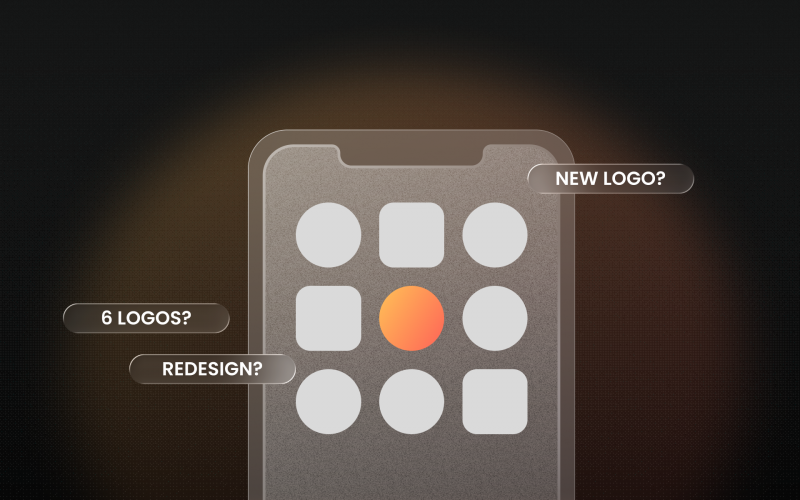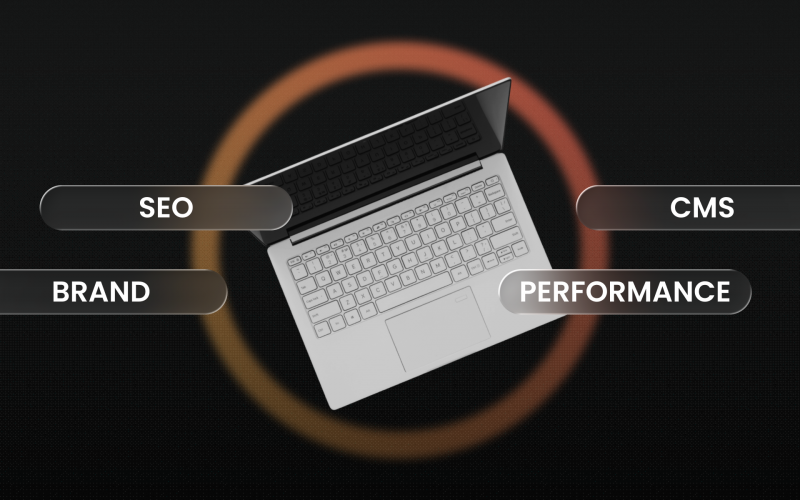

If your brand disappeared from the internet tomorrow, would anyone notice the difference?
That’s a harder question than it sounds. Because most brands, including smart, well-run ones, are producing creative that looks nearly identical to their competitors. Same stock imagery. Same color palette. Same headline structure. Same tone.
Generic creative isn’t just aesthetically forgettable. It’s a business problem. When prospects can’t distinguish your brand from the three others they’re evaluating, you lose before the conversation even starts.
Here’s why it happens and what it takes to actually fix it.
Why Generic Creative Is More Common Than You Think
No brand sets out to look generic. Most have brand guidelines, a defined color palette, maybe even a mood board. But somewhere between the strategy and the execution, the work ends up looking like everyone else’s anyway.
A few reasons this happens:
Templates and stock become the default. When speed and budget are the primary constraints, teams reach for the fastest option. Stock photo libraries. Template-based layouts. AI-generated filler imagery. These tools aren’t inherently bad, but they produce work that looks sourced, not created. And sourced creative reads as generic, regardless of how well it’s arranged.
“Safe” gets approved, bold gets revised. Creative that challenges expectations tends to generate more feedback, more rounds, more risk. So over time, teams unconsciously drift toward work that passes review without friction. The result is polished, competent, and completely unmemorable.
Visual identity gets executed without interpretation. A brand guide defines colors, fonts, and logo rules. It doesn’t always define how to make the brand feel. Two designers can follow the same brand guide and produce creative that looks like it came from different companies. Brand identity needs a point of view, not just a rulebook.
What Generic Creative Actually Costs You
It’s easy to treat generic creative as a minor aesthetic problem. It’s not.
Generic creative erodes trust before anyone reads a word. When a prospect encounters a brand for the first time, through an ad, a social post, a website, they make a fast, largely unconscious assessment of credibility. Creative that looks like everything else signals: we’re not especially invested in how we show up. That signal is hard to undo.
Generic creative loses the scroll. In a feed-based environment, you have under a second to stop someone’s thumb. If your creative blends into the visual noise around it, it doesn’t get a chance to communicate anything, no matter how strong the message underneath it is.
Generic creative makes differentiation impossible. If your ad could have been made by any competitor in your space, it’s actively working against your positioning. You’re spending money to reinforce that you’re interchangeable.
What Actually Makes Creative Distinctive
Distinctive creative isn’t about being louder or more elaborate. It’s about being specific.
Show the real thing
Custom photography and video of your actual product, your actual team, and your actual customers will always outperform stock imagery. Not just aesthetically, but in how much people trust what they’re seeing. Specificity builds credibility. A photo of a real customer in a real environment communicates something a staged stock photo never can.

Make the invisible visible
For brands with complex or abstract offerings, whether software, services, consulting, or infrastructure, the challenge is making the value tangible. This is where 3D visualization, motion, custom illustration, and interactive content earn their place. Not as decoration, but as tools for showing what can’t be photographed.
Give the brand a genuine voice
A brand that sounds like itself, with specific word choices, a consistent point of view, and a tone that doesn’t read like it was written by committee, creates a recognition that reinforces every visual touchpoint. Voice is part of creative. When it’s generic, the work feels generic even when the design isn’t.
Build a visual system, not a collection of assets
Distinctive brands aren’t distinctive because of a single great ad or a beautiful homepage. They’re distinctive because their visual language is consistent and owned. The way they use color, composition, type, and imagery adds up to something recognizable across every context. That’s a system, not a style.
How to Evaluate Whether Your Creative Is Generic
A straightforward test: pull up your last five pieces of brand creative, a social post, an ad, a webpage section, a presentation slide, an email header. Now ask:
Could this have come from a competitor? If the answer is yes, or even maybe, that’s a problem worth addressing.
Is there anything here that only your brand could have made? This could be a specific visual style, a tone of voice, a proprietary product shot, a storytelling angle. If nothing comes to mind, you’re working with borrowed visual language.
Does it reflect how we actually want to be perceived? Sometimes creative is distinctive in a direction that doesn’t serve the brand. Distinctiveness matters, but so does alignment with positioning.
These questions aren’t about liking or not liking the work. They’re about whether the work is doing the strategic job it was made to do.
This Isn’t About Budget. It’s About Intention.
Distinctive creative doesn’t require unlimited production budgets. It requires clear thinking about what the brand actually is, what it stands for, and what kind of impression it should leave.
Some of the most recognizable brand creative in any category is also among the most economical. What makes it work isn’t production value. It’s point of view. A consistent, specific, honest way of showing up that over time becomes its own form of recognition.
That starts with deciding generic is no longer acceptable. And then building a system, for photography, design, copy, and motion, that makes distinctiveness the default instead of the exception.
Think your creative might be blending in when it should be standing out?
Let’s take a look together.